AI Summary
- The G20 has committed to advancing clearer regulatory and supervisory frameworks for digital finance.
- Its cross border payments roadmap prioritizes speed, cost, accessibility, transparency, and ISO 20022 harmonization.
- Earlier institutional work connects Ripple and Stellar to the payment and digital currency problems covered by that agenda.
- The supplied evidence does not show that the G20 endorsed XRP, XLM, or any specific blockchain for deployment.
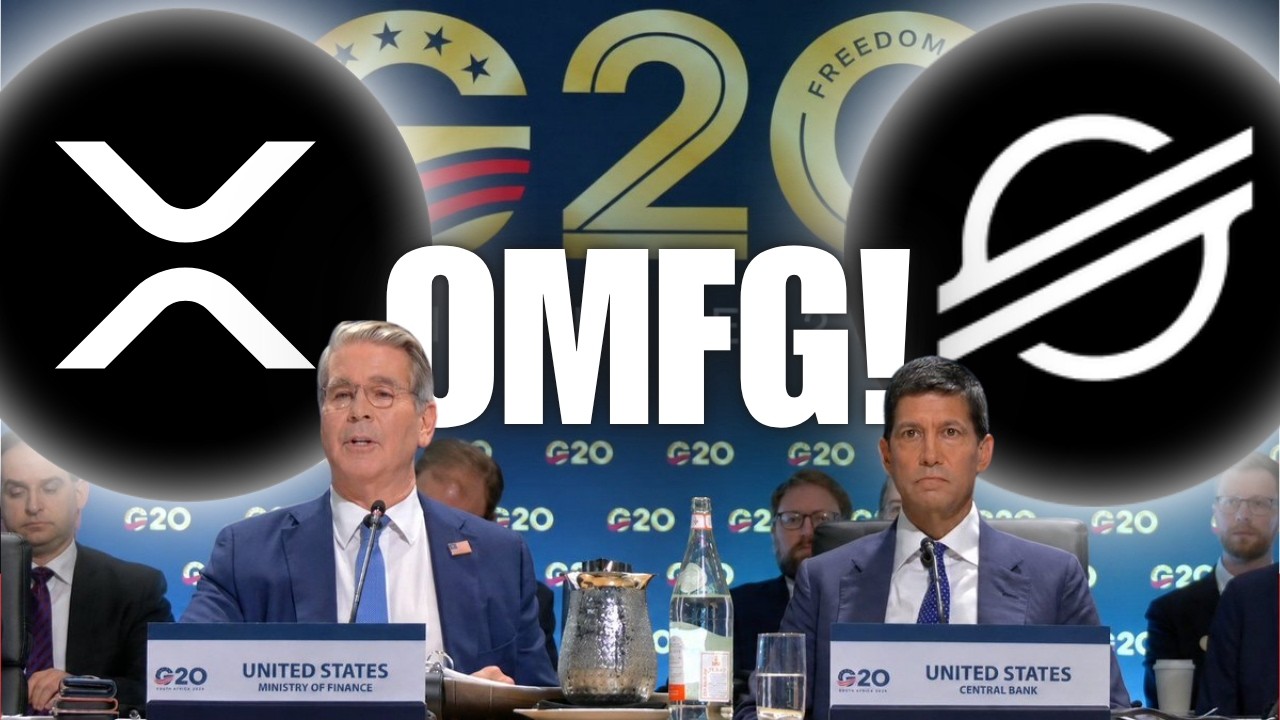
The popular interpretation of the latest G20 language is that major economies have effectively approved particular cryptocurrencies. The concrete sourced fact is narrower but still consequential: the G20 finance ministers and central bank governors recognized a potentially transformative role for digital finance and committed to advancing regulatory and supervisory frameworks that support innovation while protecting financial stability.
That commitment gives fresh relevance to Ripple, XRP, Stellar, and XLM, because earlier institutional material connected these technologies to cross border payments, bank settlement, and digital currency experiments. It does not establish that the G20 selected either network. Readers following the two ecosystems can find our dedicated research on XRP and Stellar.
The distinction matters. The supplied source describes G20 members as representing roughly 85% of global GDP, more than 75% of global trade, and about two thirds of the world’s population. Policy coordination at that scale can shape the conditions under which payment technology develops, but recognition of a technology category is not an endorsement of a token. Our analysis is that the policy direction strengthens the institutional case for studying blockchain payment infrastructure while leaving competition, implementation, and asset demand unresolved.
What the G20 actually committed to
The chair’s statement reproduced in the supplied material places digital assets among the economic and financial priorities pursued under the United States G20 presidency. Its operative language combines encouragement of private innovation with explicit safeguards for the monetary and payment system.
“We recognize the transformative role that digital finance innovation, including digital assets, can play in supporting broad-based economic growth and the key role of the private sector.”
This is a policy acknowledgment, not a procurement decision. The statement does, however, move beyond merely observing digital finance. It commits participating authorities to develop conditions under which sound innovation can proceed.
“We commit to advancing responsible and effective regulatory and supervisory frameworks that preserve financial stability, support economic growth, and establish clear paths for sound digital finance asset innovation while considering cross-border opportunities and challenges as appropriate.”
- Regulation: clearer paths for responsible digital finance innovation.
- Supervision: continued attention to financial stability and trust.
- Payments: further work on international speed, cost, access, and transparency.
- Data: encouragement of harmonized ISO 20022 models alongside domestic legal and security requirements.
The result is a more constructive institutional environment for distributed ledger technology, but one bounded by regulation, operational resilience, and monetary stability. Those conditions are likely to be as important as technical performance when authorities assess any network.
Cross border payments remain the practical test
The strongest connection between G20 digital finance policy and public blockchain infrastructure is the existing agenda for cross border payments. According to the supplied material, the G20 made payment reform a priority in 2020 through a roadmap developed by the Financial Stability Board in coordination with the Bank for International Settlements committee and other standard setters.
“The roadmap aims to make such payments faster, cheaper, and more accessible and transparent.”
The G20 subsequently endorsed quantitative targets covering three payment segments in 2021. Those segments identify where infrastructure must produce measurable improvements rather than merely demonstrate that transactions can move on a ledger.
- Wholesale payments: large value transfers between financial institutions.
- Retail payments: international transactions involving businesses and consumers.
- Remittances: transfers for which cost, accessibility, and transparency are especially important.
The FSB material cited in the source also addresses global stablecoin arrangements, payment data, and the operating hours of large value systems. This shows that the roadmap is technology neutral and wider than cryptocurrency. Blockchain networks must compete with improvements to existing rails, harmonized messaging, stablecoins, and other forms of regulated infrastructure.
Ripple has institutional relevance without an official mandate
The Ripple connection rests on earlier institutional analysis, not on the new G20 statement naming XRP. The supplied source identifies an OMFIF report on blockchain in banking that considered Ripple as an alternative model for international settlement. Its described scenario involved banks moving XRP, converting it into local currency, reducing intermediaries, and consolidating liquidity that would otherwise sit across multiple correspondent accounts.
An older OECD discussion cited in the source examined cryptocurrencies and new payment systems as attention shifted from creating currencies outside central banking toward making transactions more efficient and secure. Its assessment of Ripple was notably direct:
“Ripple is an interesting case in point that could well serve as a model for bank evolution.”
That statement supports the conclusion that Ripple’s architecture had entered institutional policy discussions. It does not prove later adoption, continuing tests, or official preference. It is also important to separate Ripple’s software and network proposition from demand for XRP itself. A payment provider can attract institutional attention without every implementation requiring the public asset in the same way.
- Supported by the supplied material: institutional publications examined Ripple and XRP in relation to banking and international payments.
- Not established: the G20 has selected XRP as a settlement asset.
- Still uncertain: whether future regulated payment systems would create sustained public token demand.
Stellar has a direct connection to a G20 technology challenge
Stellar’s connection is different. The supplied material states that the Stellar Development Foundation, digital currency technology provider e-currency, and Australian financial institution ANZ produced a prototype that was shortlisted in the G20 Tech Sprint. The challenge was hosted by the Bank for International Settlements and Bank Indonesia.
“This year, G20 Tech Sprint aims at solving challenges related to wholesale and retail central bank digital currencies.”
The described prototype combined an e-currency platform, the Stellar blockchain, and ANZ’s access model for digital assets. Its purpose was to explore the issuance, distribution, and transfer of CBDCs, including interoperability and financial inclusion. Being shortlisted demonstrates that the architecture was considered relevant to the challenge; it does not mean a central bank deployed Stellar or committed to XLM.
That distinction makes the evidence more useful, not less. A competitive prototype is a concrete technical reference point. It allows analysts to ask whether the network’s design can satisfy policy requirements involving access control, interoperability, security, and regulated issuance. The public token’s investment case remains a separate question.
What the evidence does not prove
The phrase “green light” compresses several different developments into one bullish conclusion. The supplied evidence supports a G20 commitment to digital finance frameworks, an established international payment roadmap, past analysis of Ripple, and a Stellar related prototype in a G20 challenge. It does not document a formal endorsement of either token.
- No network selection: the chair’s statement does not name Ripple, XRP, Stellar, or XLM.
- No deployment commitment: a report reference or challenge shortlist is not a production contract.
- No guaranteed token utility: institutional use of related technology does not automatically require market purchases of a public token.
- No fixed implementation path: the agenda also covers stablecoins, conventional payment systems, data standards, and tokenization.
In our view, the most credible interpretation is that policy resistance to digital finance infrastructure may be giving way to controlled experimentation and clearer supervision. That is strategically positive for credible payment networks, but the eventual winners will still need to demonstrate compliance, reliability, interoperability, and economic advantages in live settings.
What this means
Policy legitimacy is increasing. The G20 is treating digital finance as a potential contributor to economic growth while insisting on safeguards. This gives regulated infrastructure projects a clearer problem set around which to build.
Ripple and Stellar have relevant institutional histories. Ripple appeared in banking and policy analysis, while Stellar participated in a shortlisted digital currency prototype. These are meaningful credentials, although neither amounts to G20 approval.
Execution matters more than association. Our analysis is that future significance for XRP and XLM depends on whether deployments use the public networks and tokens, not simply whether their associated organizations remain visible in policy discussions.
Bigger picture
The verified AllinCrypto context shows that this debate extends beyond a single G20 statement. The Bank for International Settlements has tested XRP Ledger anchoring for verifiable official statistics, while an Australian central bank project tested XRP Ledger and RLUSD in work involving government bonds. These examples concern specific experiments and should not be generalized into universal institutional adoption.
Stellar also appears across several supplied developments. AllinCrypto has covered USDT0 liquidity on Stellar’s payments network and DTCC’s selection of Stellar for tokenized assets. A separate institutional analysis named Stellar, Ripple, and Chainlink in the tokenization market.
Taken together, these developments suggest that payment modernization and tokenization are becoming connected fields of institutional experimentation. We see the G20 commitment as validation of the problem, not confirmation of the solution. Ripple and Stellar are credible participants in that search, but claims about official selection or inevitable value capture go beyond the supplied evidence.
Sources
This article is for informational purposes only and does not constitute financial advice.